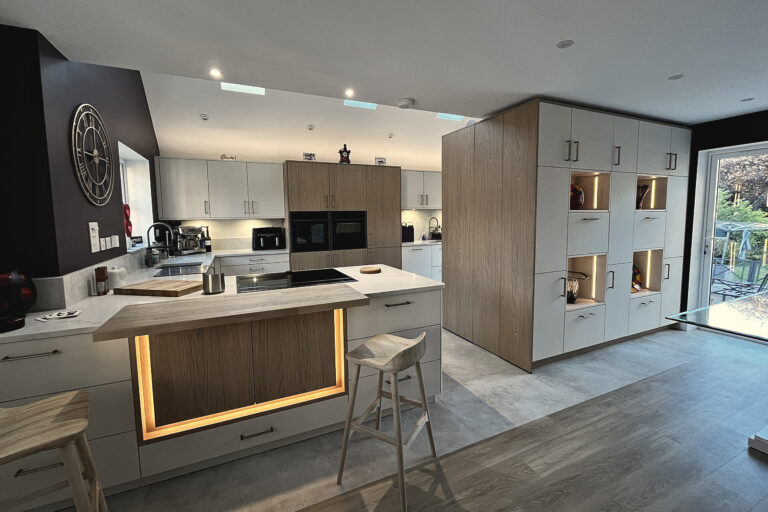
Wood
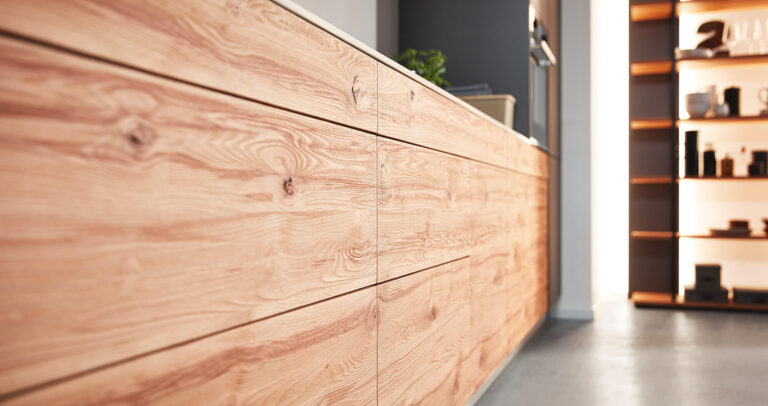
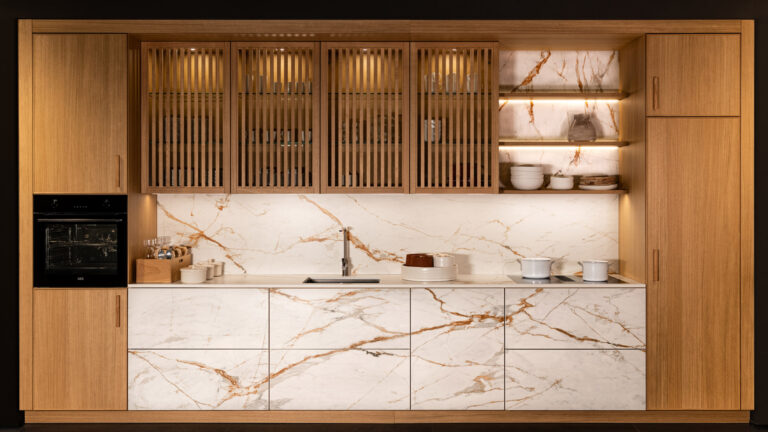
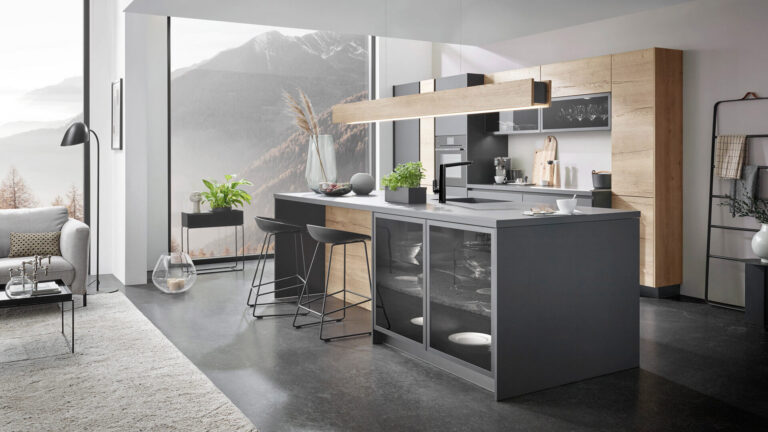
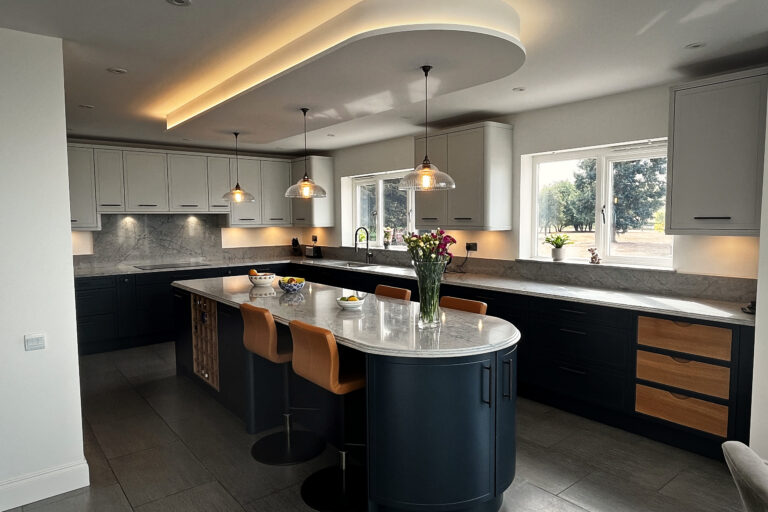
Real timber and timber veneer, including split oak with deep knotty graining, sometimes dyed along the grain. Book-matching runs the figure symmetrically across a pair of doors.
The only finish that is different on every door, because no two boards are.
Timber and timber veneer bring something no manufactured surface can: figure. Grain, knots, medullary rays and colour variation across a run are the decoration, and they are the reason a wood kitchen keeps looking interesting years after a plain colour has become background.
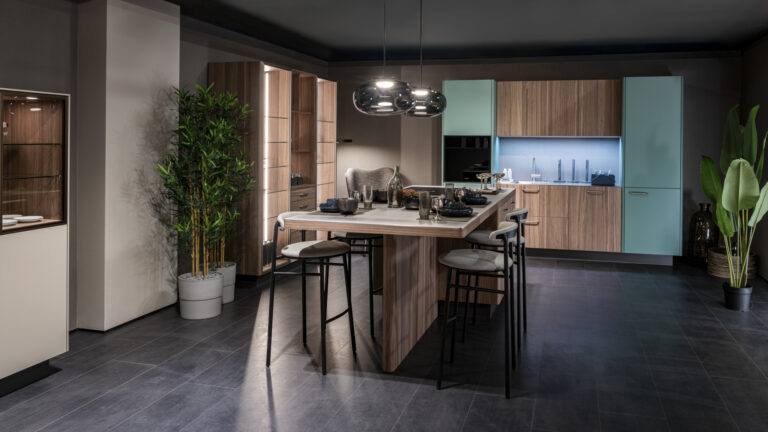
The range is wider than people expect. Split oak with deep knotty graining, walnut with a strong dark figure, ash dyed along the grain so the colour sits in the pattern rather than over it — and bookmatched veneer, where the figure runs symmetrically across a bank of doors.
It is also the finish that ages best. Timber marks softly and those marks read as character; oiled surfaces can be topped up at home, and a veneer run lit from beneath will show its figure at night as well as in daylight.
Solid timber or veneer
Solid suits framed and in-frame doors and can be sanded and re-oiled. Veneer gives a flatter, more stable face on a long slab door and makes bookmatching possible.
Split oak and knotty graining
The deeper, more textured cuts have real presence, and they suit a room with stone or plaster in it. Worth seeing a full door rather than a sample chip.
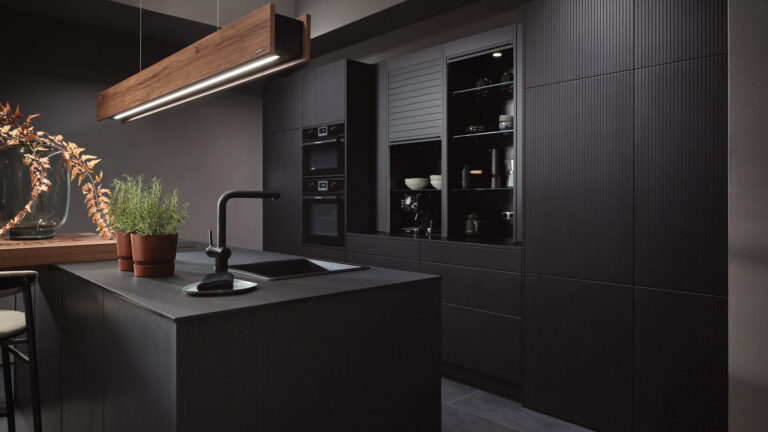
Dyed along the grain
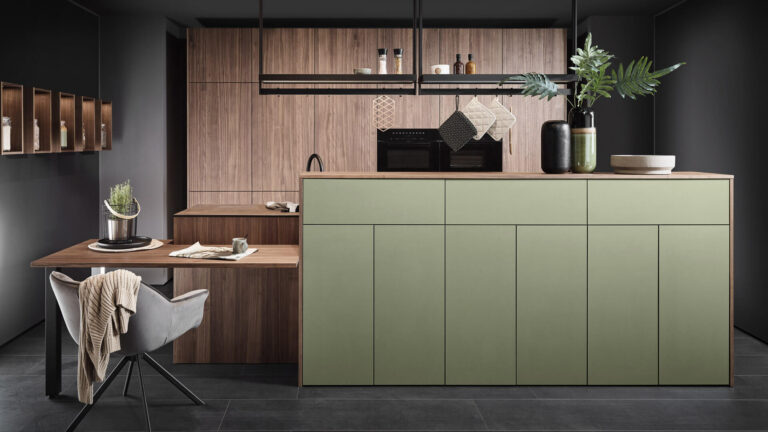
Colour taken into the timber rather than laid on top, so the figure stays visible through a grey, a green or a near-black. It is how you get a dark kitchen that still reads as wood.
Bookmatched runs
Leaves cut in sequence and mirrored so a whole bank of doors carries one symmetrical pattern. The most striking thing timber can do in a kitchen.
Warms a cool room
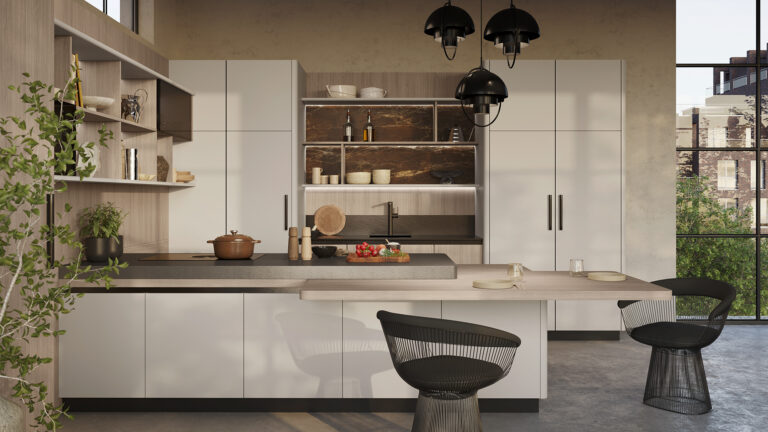
A timber run brings warmth into a scheme built on stone, concrete or pale grey, and it is the usual answer when a contemporary kitchen feels a little cold.
Oiled or lacquered
Oiled can be refreshed at home and develops a patina; lacquered is harder wearing and needs nothing doing to it. Both are available across the range.
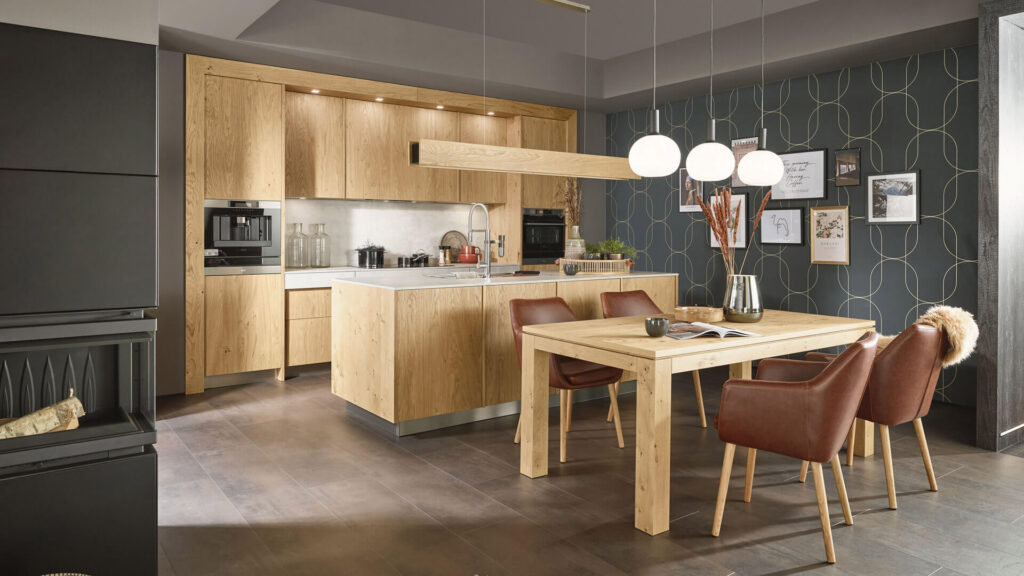
Four decisions that decide how the timber reads
Wood kitchens
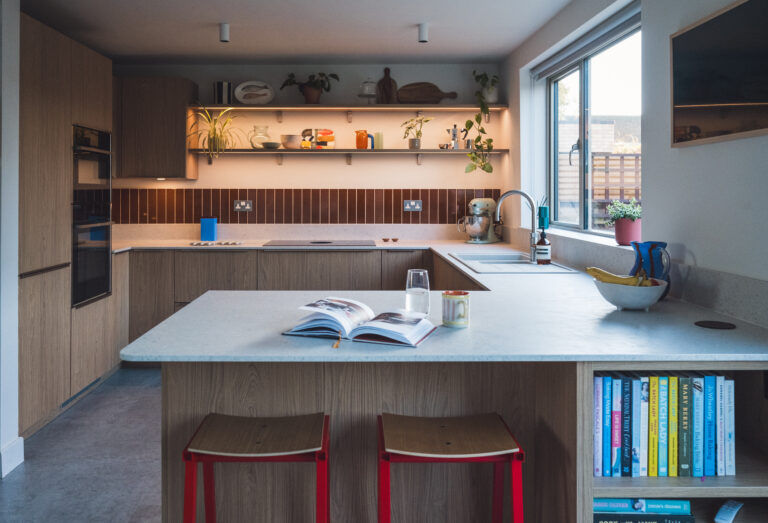
Casella Oak and Stone Tambora
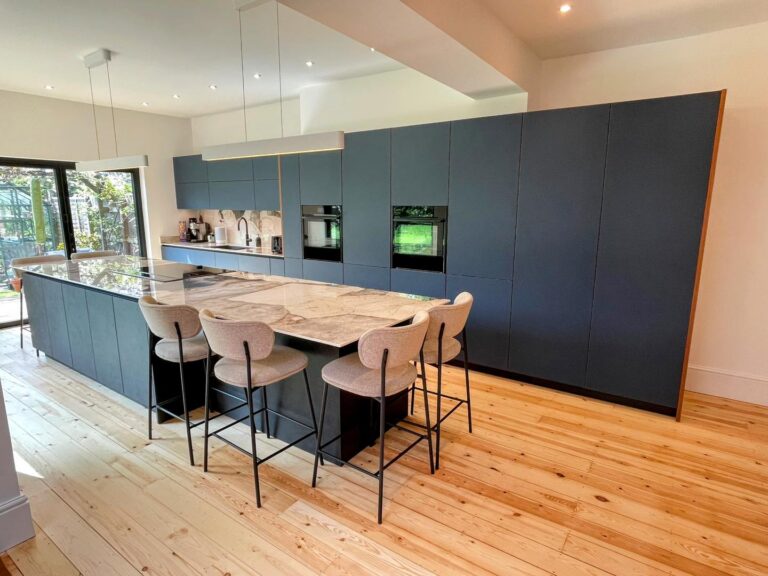
Real walnut, quietly done
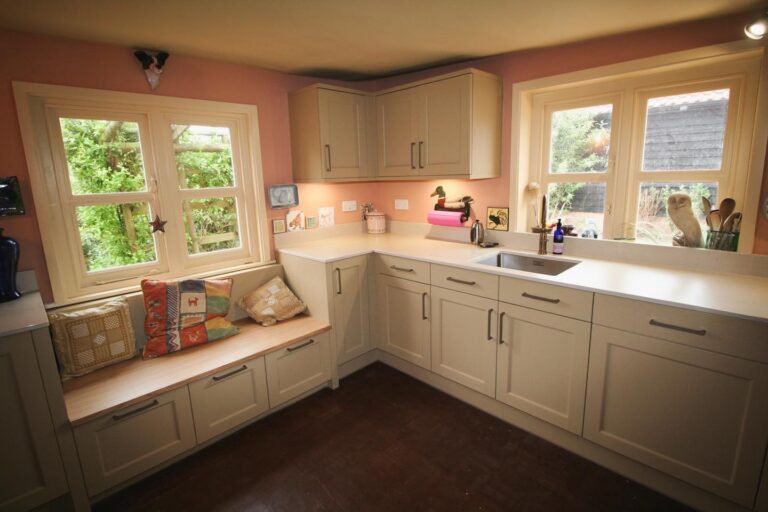
A farmhouse kitchen in the old Cheese Room
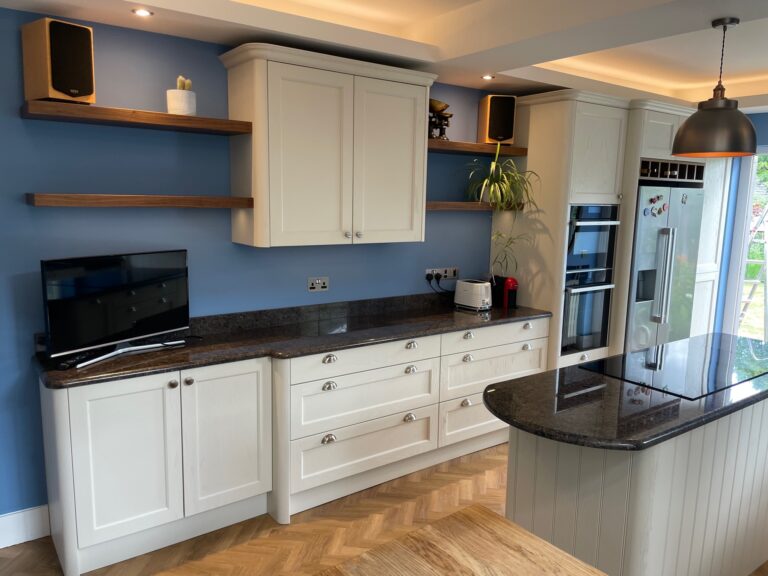
Painted oak Cudham, classic and unhurried
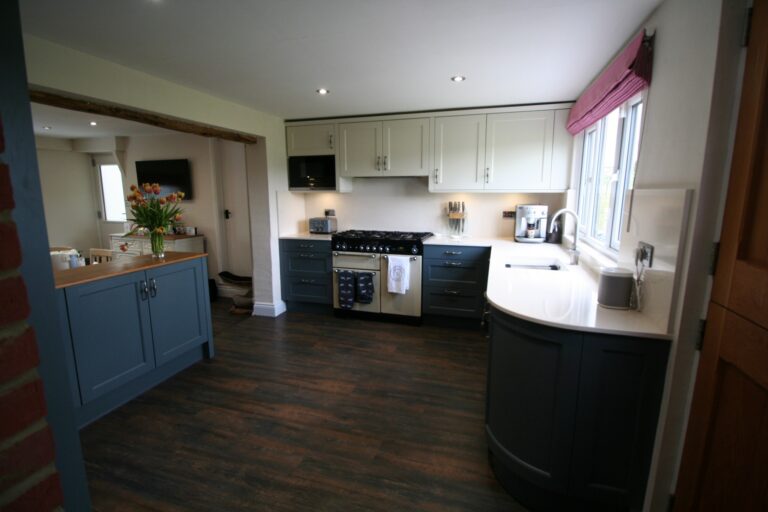
Thunder Grey in a cottage kitchen
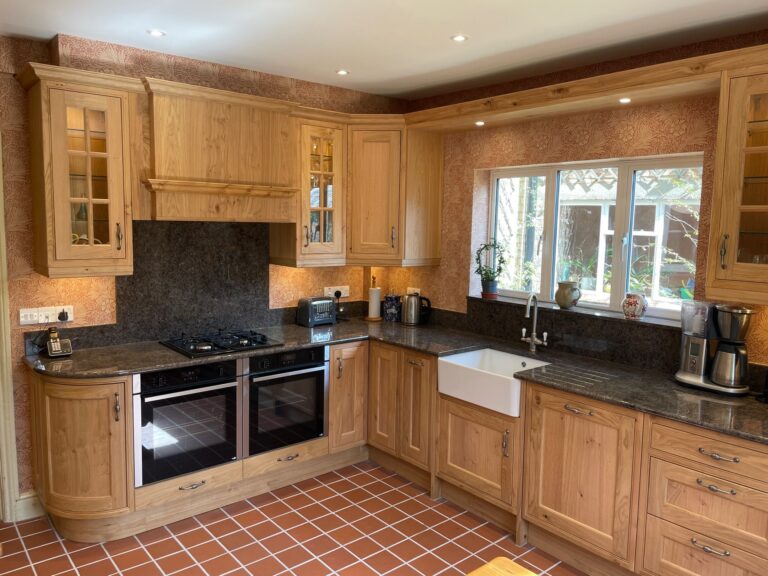
Character oak in-frame, for a period property
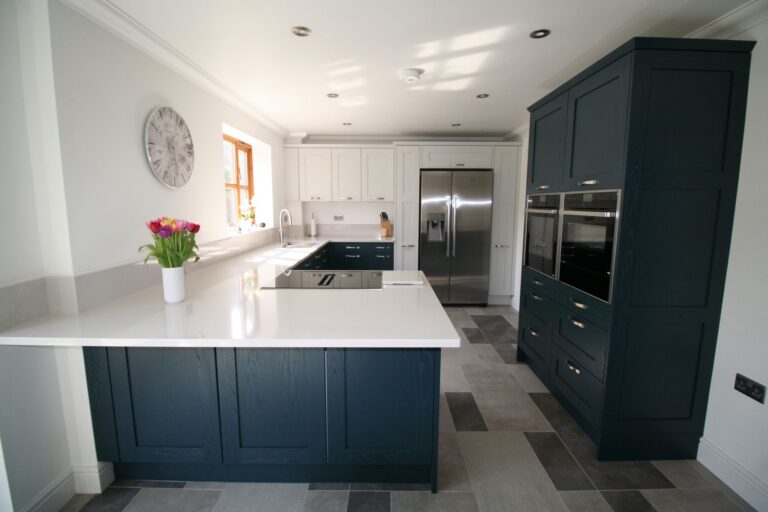
Hague Blue and Dove Grey, painted oak
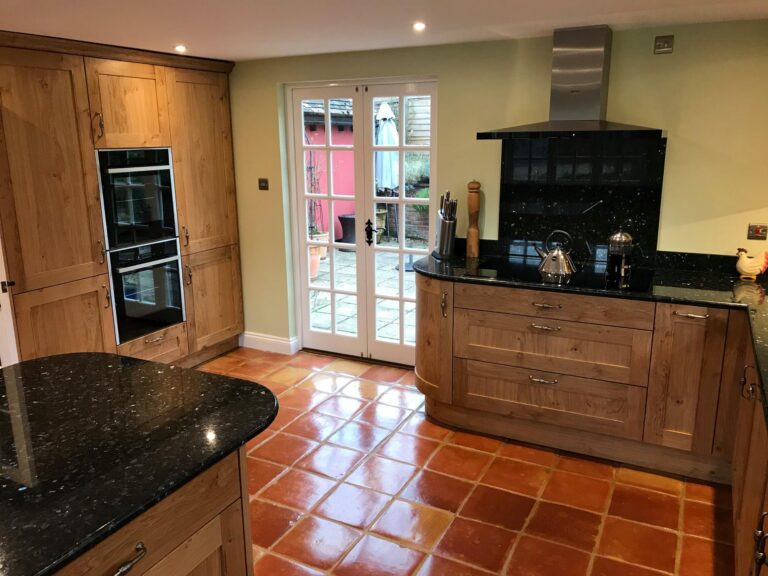
Lullingstone in character oak
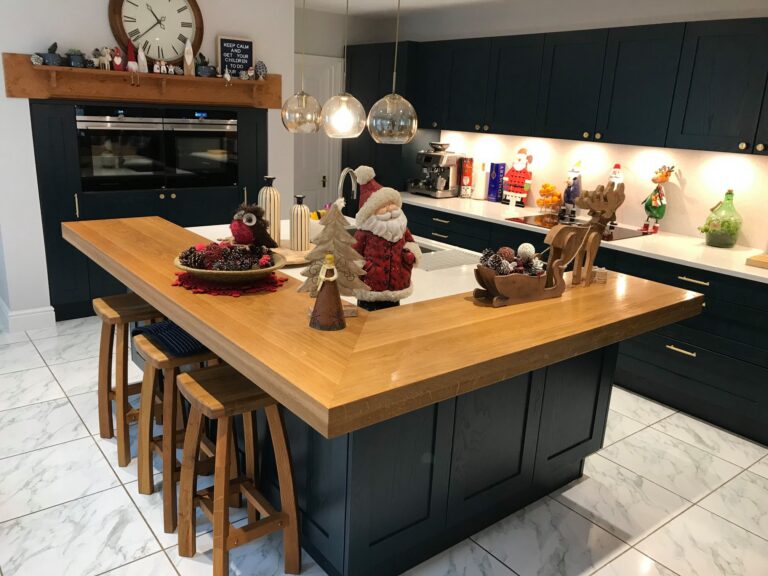
Blue Hague painted oak, and handmade brass
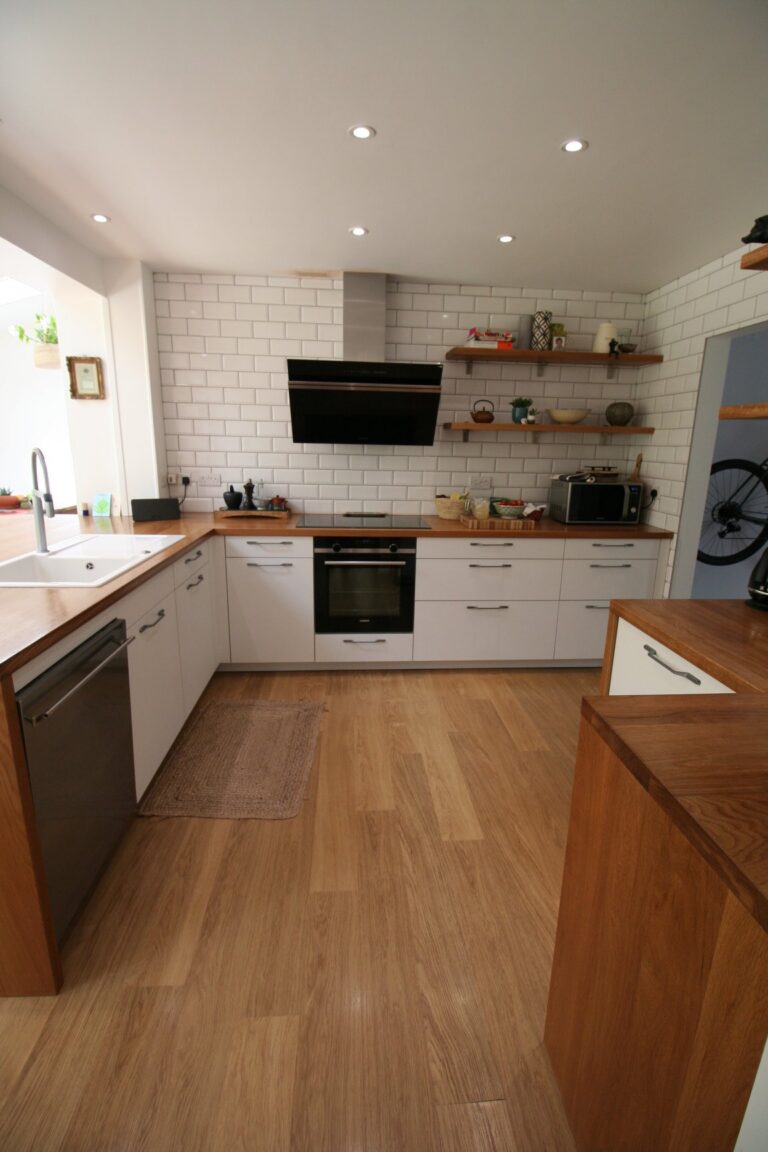
Porcelain White, with a traditional nod
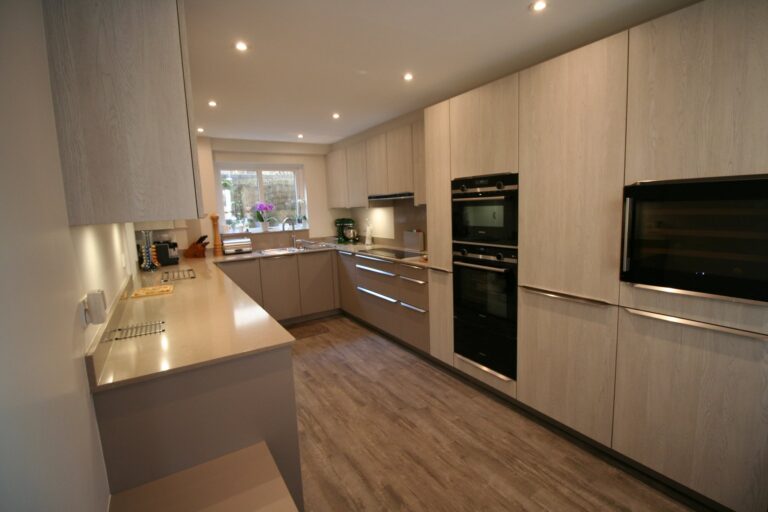
Mahlzeit in Pearly Oak and Stone Grey