Linoleum
A natural material with a warm, slightly chalky surface and a pleasant tactility. Muted colours, naturally antibacterial, and quieter to the touch than any lacquer.
Linseed oil, pine resin and wood flour. The oldest material here, and the quietest.
Linoleum is made from linseed oil, pine resin, wood flour and jute — a natural material rather than a plastic one, and it behaves quite differently from everything else on this page. The surface is warm to the hand, faintly chalky, and it deadens sound instead of reflecting it.
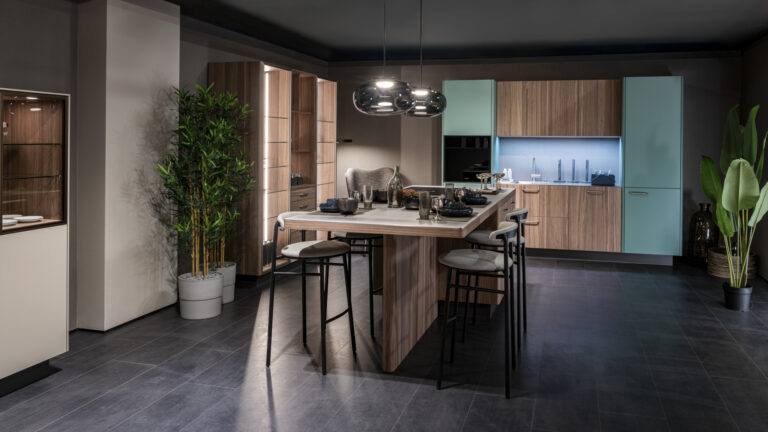
Sachsenküchen offer it in twenty-four muted colours, and lately in embossed textures too: the Leona and Leonora fronts carry a fine woven structure that catches light across the door without being obvious about it.
It is naturally antibacterial, which is a property of the material rather than a coating, and it stays that way for the life of the kitchen. In a room where the cabinetry is meant to recede, nothing else is quite this calm.
Warm and quiet to the touch
It takes the temperature of the room rather than feeling cold, and a linoleum drawer closes with a softer sound than a lacquered one. Small things you notice daily.
Naturally antibacterial
A property of the linseed oil itself, not a treatment applied on top, so it does not wear off or need renewing.
Twenty-four muted colours
Chalky greens, greys, clay and stone tones. The palette is deliberately soft, which is why it sits so easily with timber and with plaster walls.
Embossed textures
The newer Leona and Leonora fronts carry a woven or urban structure pressed into the surface, giving a subtle pattern that changes with the light.
A natural material
Linseed oil, pine resin, wood flour and jute. For a client who cares what the kitchen is made of, this is the honest answer in the range.
Pattern direction is yours
The textured fronts can be run horizontally or vertically, so the structure can be used to widen a run or lift a tall bank.