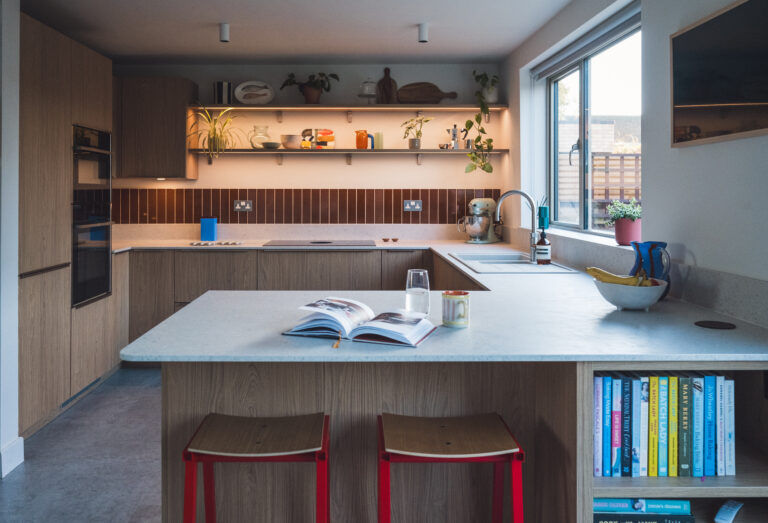
Curved kitchens
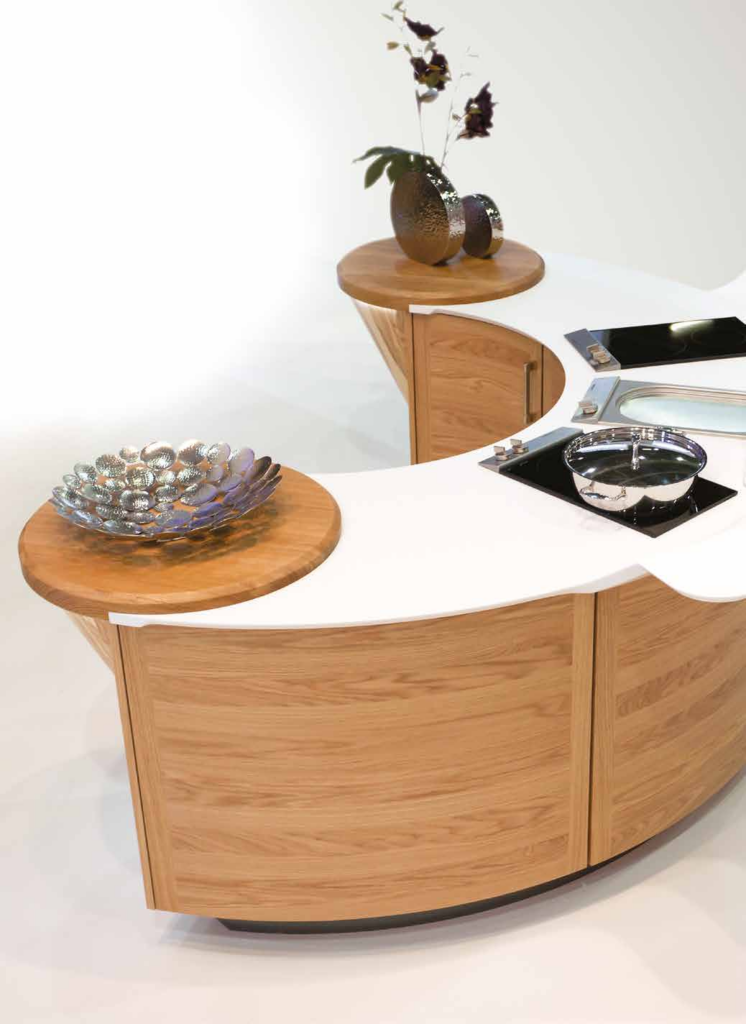
A door built to a radius instead of a right angle. The most demanding thing on this list to make, and the first detail anyone notices.
A curve is not something you add later. It is drawn at the plan stage or not at all.
A curved door is made by laminating thin leaves of timber around a form, or by machining the shape out of a thick blank. Either way it is made to a single radius, drawn for your room — which is why curved work belongs to the made-to-order manufacturers, and why we settle the curve on the plan before anything is cut.
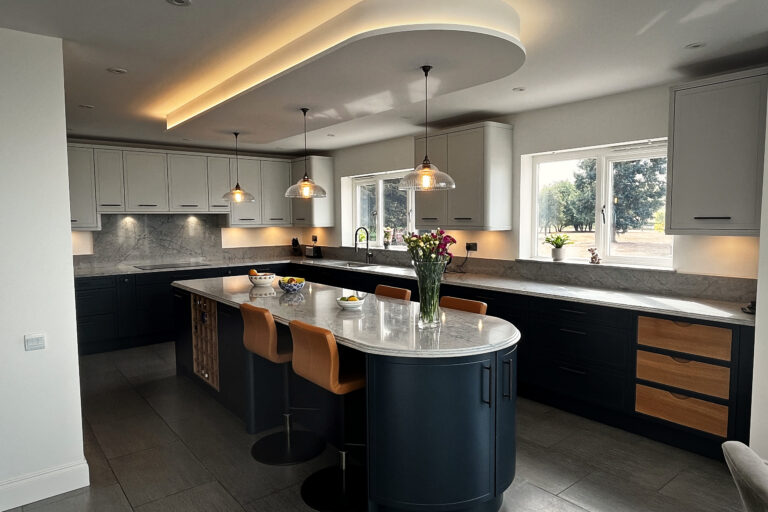
What it buys is circulation. Taking the corner off an island end, or off the end of a run beside a doorway, removes the point people walk into and the corner children run into. Stoneham put it in one line in their 2026 brochure: “Curved doors create a more fluid design.”
It is at its best used once. One curved element — an island end, a peninsula return, a dresser — is the thing a room gets remembered for, and it is a detail that only comes from furniture built to order rather than chosen from a catalogue. Worth settling the worktop material alongside it, so the two are templated together.
Convex and concave behave differently
A convex curve pushes into the room and softens a hard end. A concave one pulls back and makes space — usually for seating. Concave is the harder of the two to make and the more likely to look wrong if the radius fights the room.
Where it earns its keep
Island and peninsula ends, the end of a run where it meets a door, and the corner of a breakfast bar. Anywhere the alternative is a square corner in a walking line.
The worktop follows it
Quartz and Dekton cut beautifully to a curve, and a timber top is built up in sections to match. We settle the worktop material alongside the curve so the two are drawn and templated as one piece of work.
Drawers can curve too
Stoneham build curved drawer fronts on bespoke boxes, and a concave drawer gives noticeably easier access than a flat one at the end of a run. It is not only doors.
Grain and paint across the sweep
On timber the leaves are matched so the grain runs round the curve rather than stopping at it. On a painted door the curve catches light differently from the flat fronts either side, so the colour reads a shade deeper — worth seeing before choosing.
It needs a straight run beside it
A curve reads against the lines around it, so it shows best with plain cabinetry either side and clear worktop through the middle. Getting that balance right is most of the design work, and it is what we sketch first.