In-frame kitchens
The door sits inside a solid timber frame rather than in front of it. The most demanding thing a cabinetmaker can build, and it shows.
Furniture, not fitted units. The frame is what makes the difference.
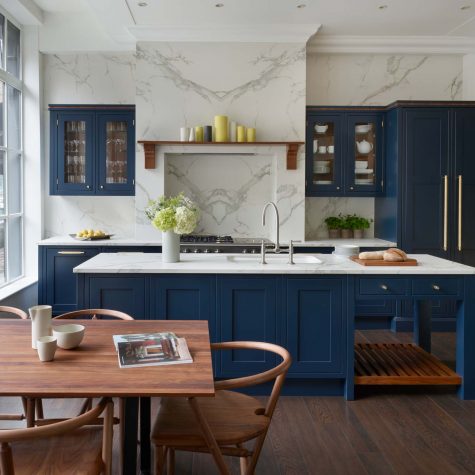
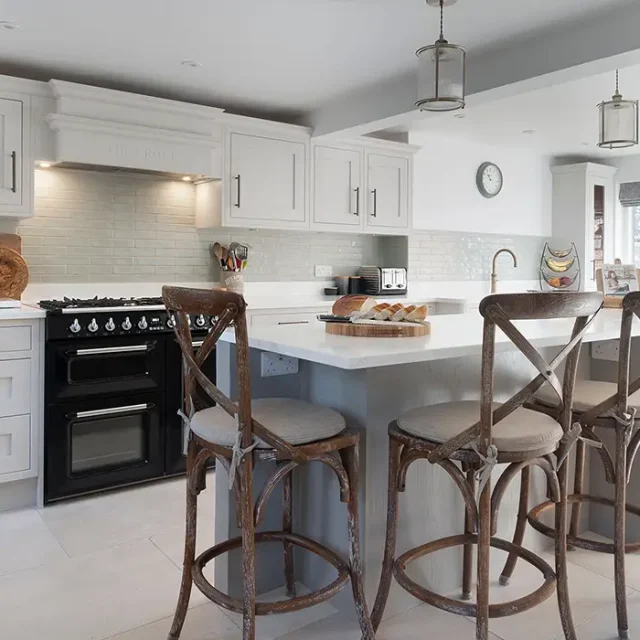
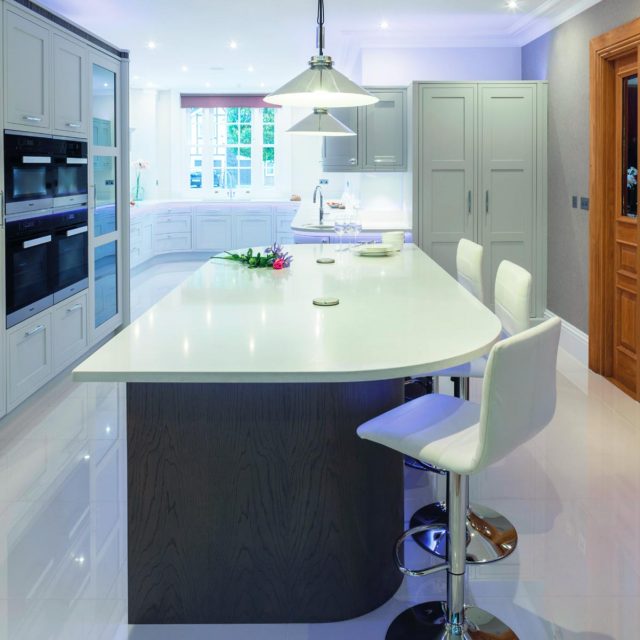
On a standard kitchen the door lies over the front of the cabinet. On an in-frame kitchen the cabinet has a solid timber face frame, and the door is set within it — flush, with a visible reveal all the way round and the hinge often on show.
It costs more, for good reason. There is considerably more timber, a great deal more machining, and the tolerances are unforgiving — a door set inside a frame has nowhere to hide.
It is a style that sits beautifully in period and listed houses, and Stoneham’s made-to-order manufacture makes it possible — a cottage wall is rarely straight, and an in-frame cabinet can be built to suit it.
Full frame or partial
A full frame shows timber on all four sides of every door. A partial frame keeps the look on the doors that matter and reduces the cost across a long run.
Visible butt hinges
Traditional and honest, in brass, pewter or blackened steel. Concealed hinges are available if you would rather the eye went elsewhere.
Enhanced grain
Stoneham's Ightham range lets the timber texture read through a soft painted finish, so the cabinetry never looks like sprayed board.
Dressers and larders
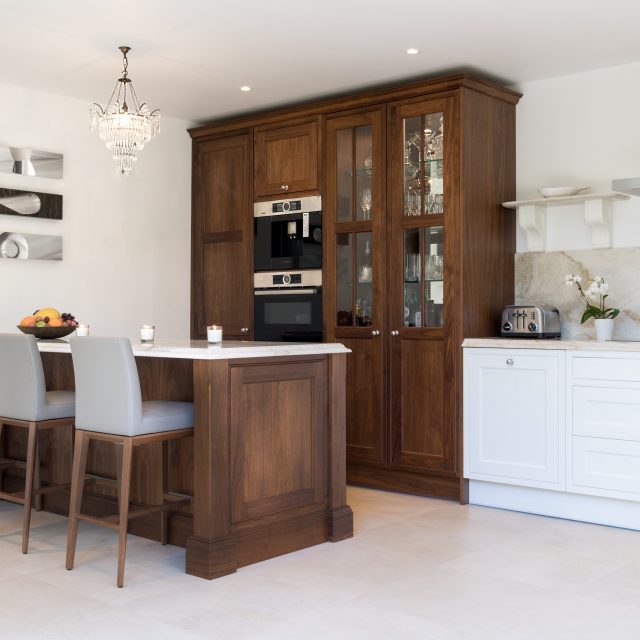
In-frame suits freestanding pieces: a dresser, a full-height larder with interior shelving, a pantry with a proper working depth.
Working with old buildings
Scribed to uneven walls, drawn around chimney breasts, detailed to meet original skirting and cornice without a run of filler.
Modern appliances, hidden
Integrated behind matching in-frame doors, so a traditional room can hold a combi-steam oven and an induction hob without announcing it.