Traditional kitchens
Timber, mouldings and warmth. A kitchen that looks as though it has always been in the house — and will still be there in twenty years.
Out of fashion for a decade, and quietly returning — because it wears well.
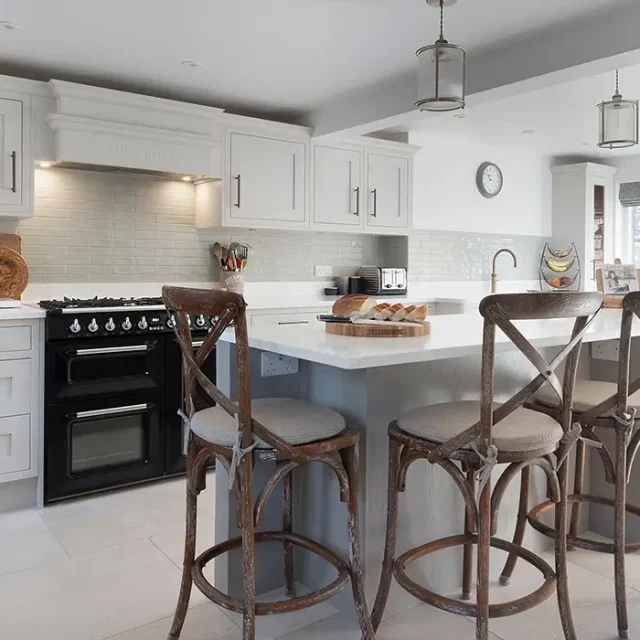
Traditional means real timber doors with a moulded profile, often oak or a painted hardwood, and the details that go with them: a mantel over the range, a plate rack, turned legs, a dresser with open shelving.
Its real advantage is age. Timber marks, and the marks look like character rather than damage — the opposite of a high-gloss door. It can be sanded, re-oiled or repainted, so a traditional kitchen can be refreshed rather than replaced.
We would steer you away from it in a small, dark room, where all that timber will close the space in. In a farmhouse or a cottage with decent light, there is nothing better.
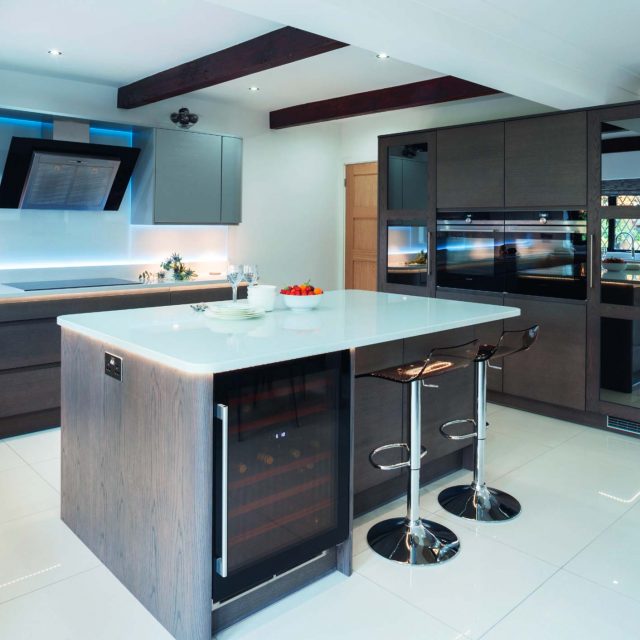
Natural timber
Oak, walnut or ash, oiled rather than lacquered so it can be topped up. The grain is the decoration.
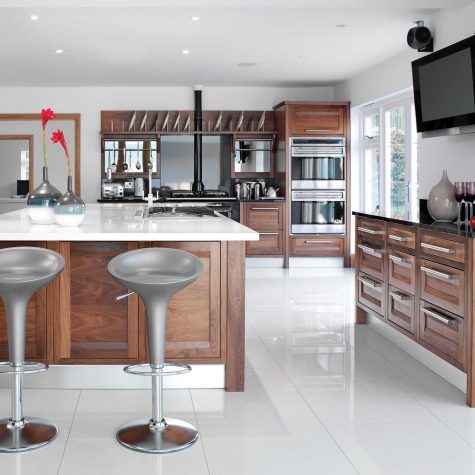
Painted hardwood
The moulded profile with a painted finish. Lighter in feel than natural timber, and repaintable when tastes move on.
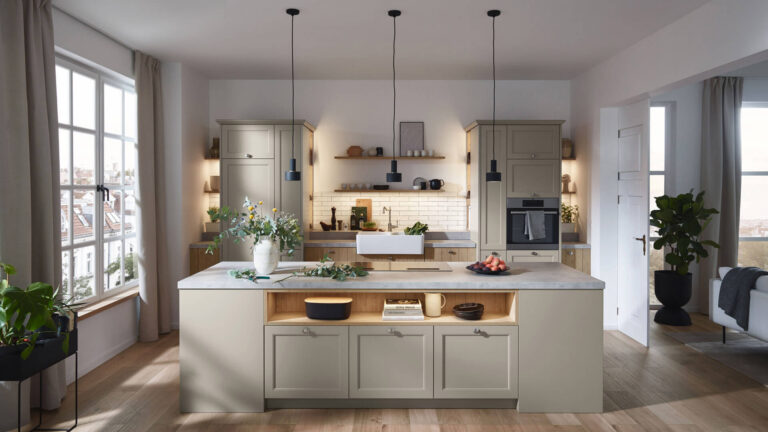
The furniture pieces
Dressers, plate racks, mantels and larders. Built in, but drawn to look as though they were carried in.
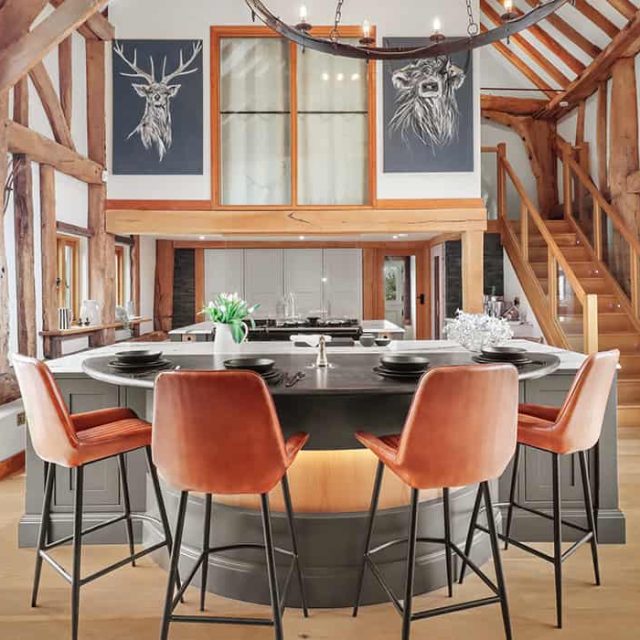
Traditional does not mean impractical
One of our kitchens featured in the national press was a thoroughly contemporary scheme inside a traditional farmhouse. The reverse works too: a traditional room can take induction, a combi-steam oven and a boiling-water tap, all concealed behind matching doors.
The style is a decision about how the room looks. It should never be a decision about how well it works.