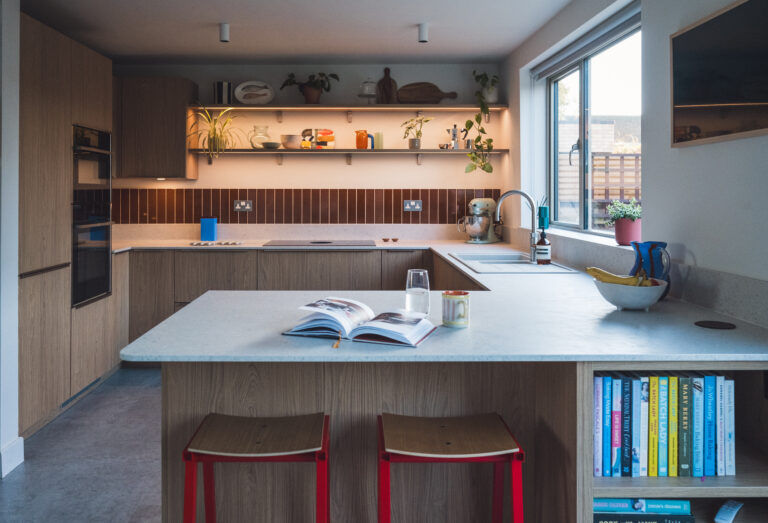
Shaker kitchens
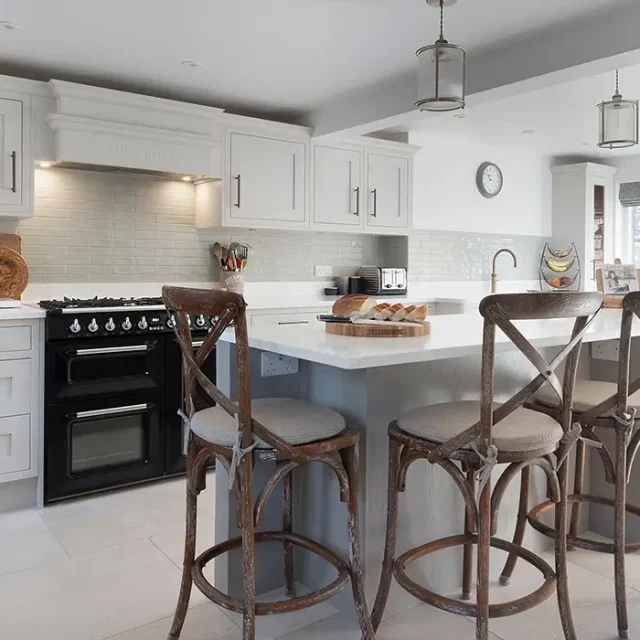
A five-piece door, a simple square frame and a flat centre panel. The design has barely changed in two centuries, which is recommendation enough.
The style we are asked for most, and the one least likely to date.
Shaker sits comfortably in almost any house. It suits a Victorian terrace and a new-build extension equally, and because the door is plain it lets the colour, the worktop and the handles do the talking.
Ours is Stoneham’s Cudham range, built to order in Kent and sprayed in any colour you can name — including a match to a paint chart, a fabric or the tiles you already own. Solid timber doors mean it can be repainted in fifteen years rather than replaced.
One practical note: the frame collects a little more dust than a slab door. A cloth deals with it, but it is worth knowing in advance.
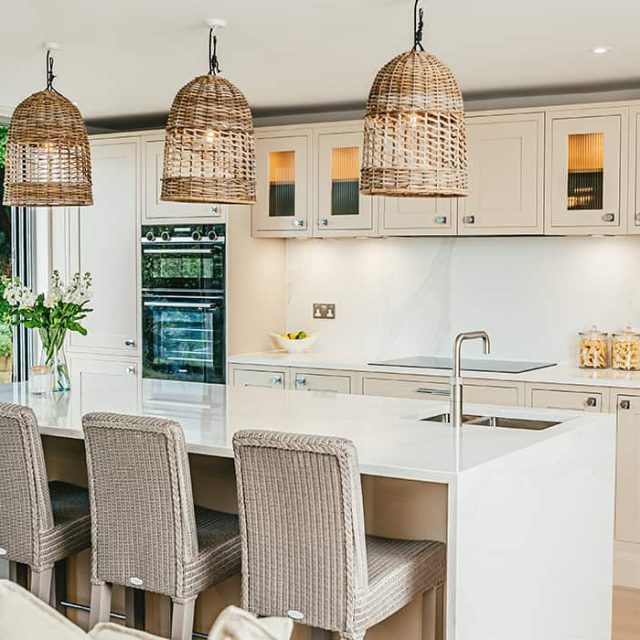
Soft neutrals
Biscuit, mussel, stone and putty. Pale without being white, and far kinder to a room that does not get much direct light.
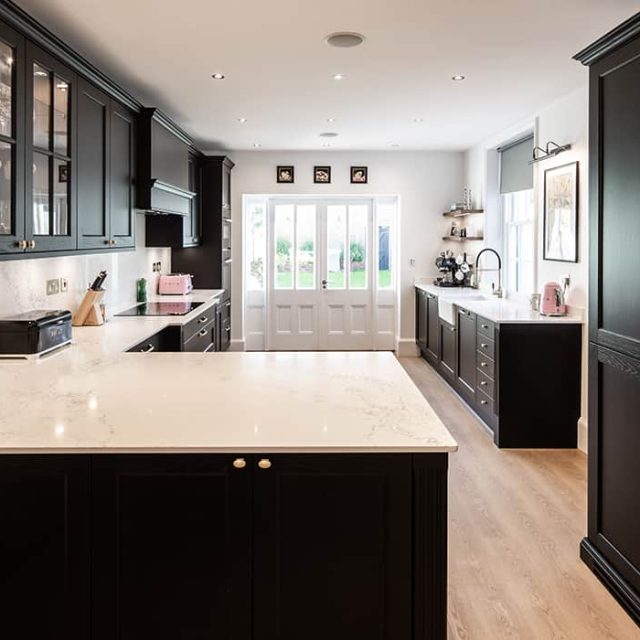
Two-tone
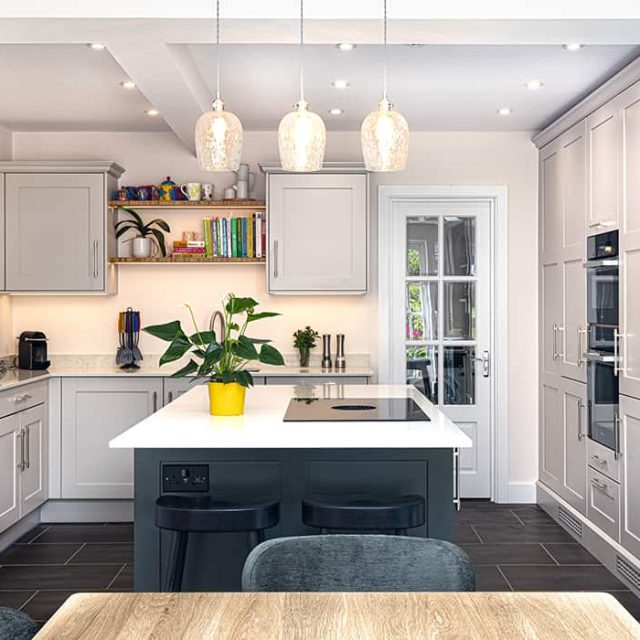
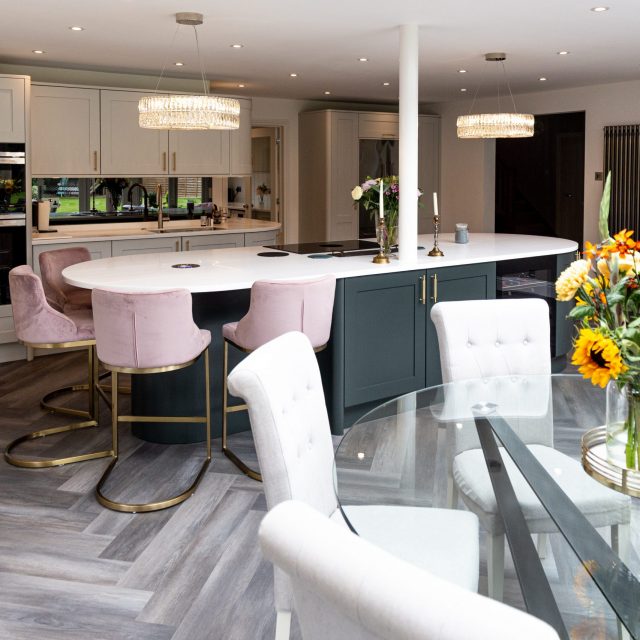
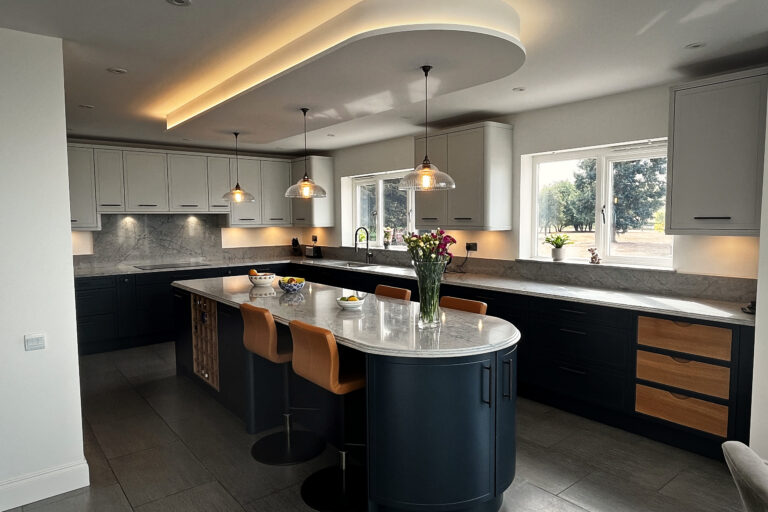
A darker island against pale perimeter units. It anchors the room, and it means you can be braver with colour on a smaller area.
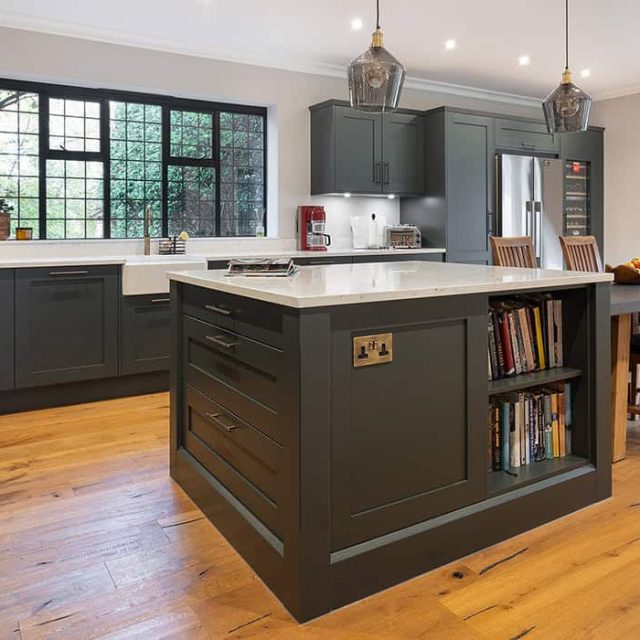
Deep colour
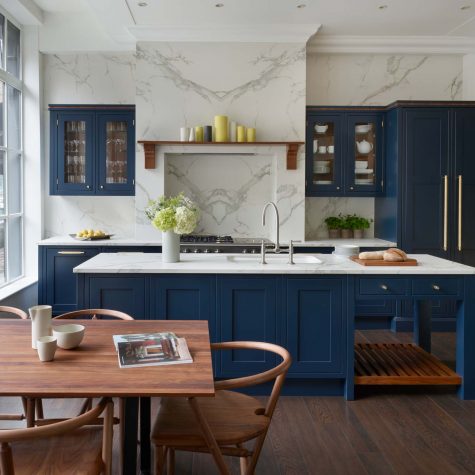
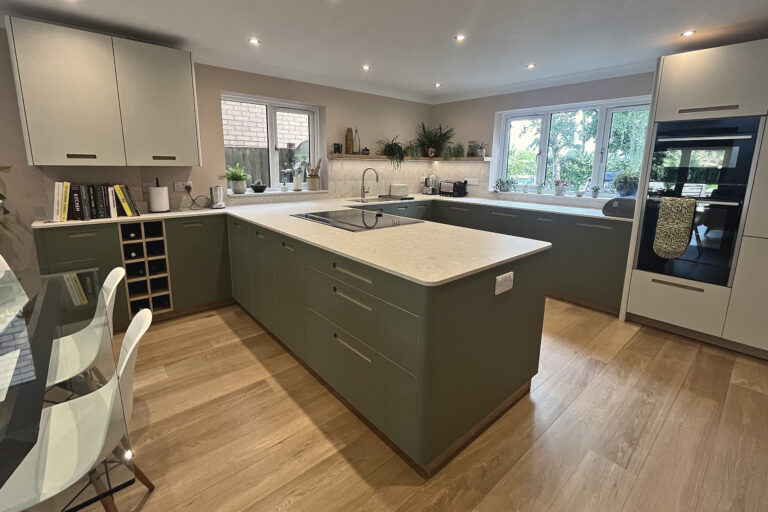
Charcoal, ink blue, grey-green. Works best with plenty of natural light, a pale worktop and warm metal handles.