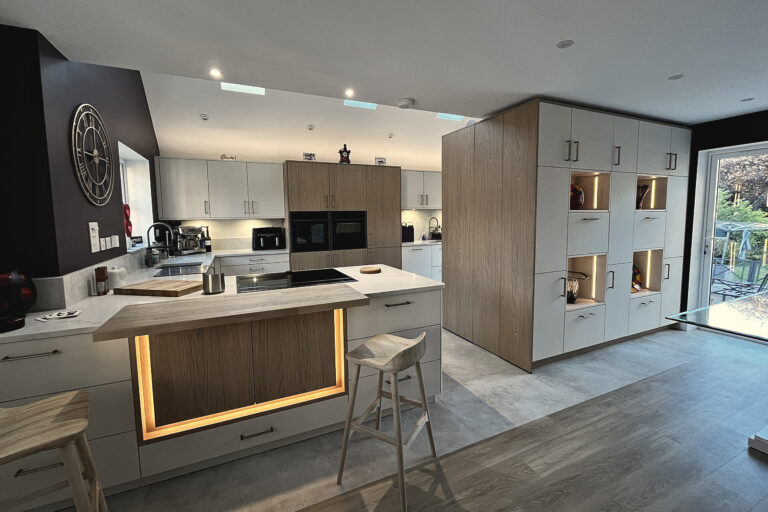
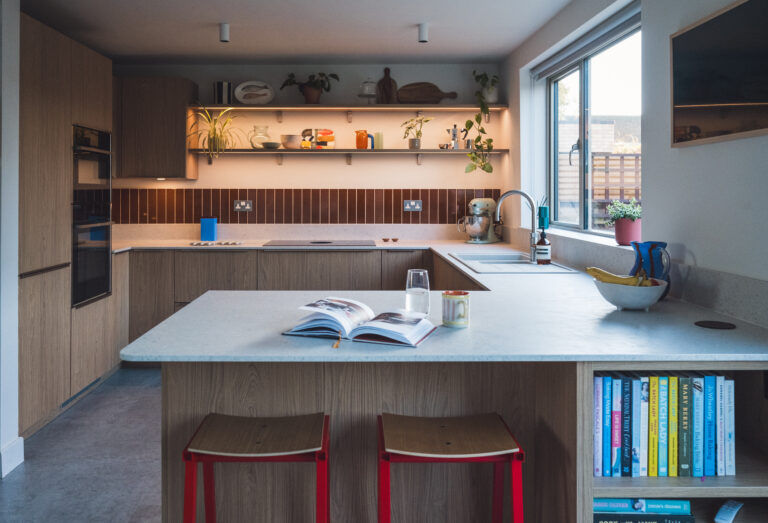
Every worktop in a showroom looks good. The question worth asking is which one still looks good after ten years of pans, hot trays, red wine and a dishwasher door that steams the front edge twice a day.
Four families cover almost everything we fit, and they age in genuinely different ways.
Quartz
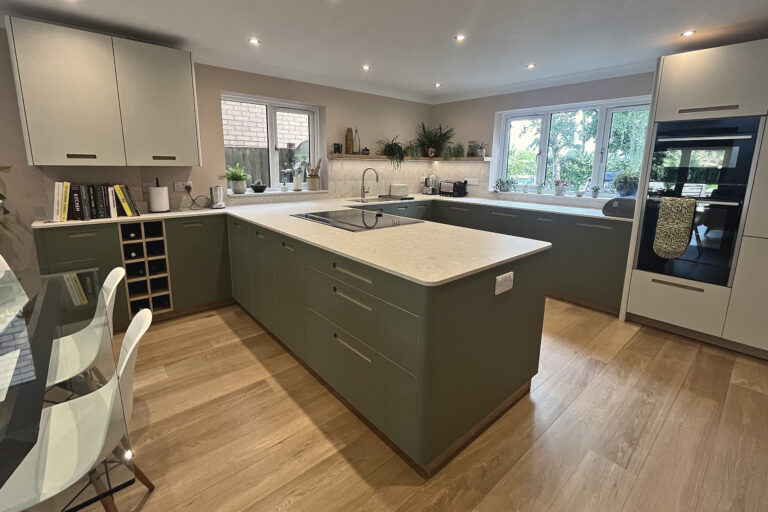
Natural stone ground and bound with resin, so it arrives consistent slab to slab and needs no sealing. It is a great all-rounder: hard, non-porous and available in a huge range of colours and patterns. Heat is the one thing to watch, because the resin can scorch. The rule of thumb is that if you can comfortably touch the pan, it can go on the worktop; otherwise, use a trivet. Silestone, Caesarstone, CRL and Vadara differ in pattern, colour and quartz content rather than durability. Some brands are reducing the quartz: Silestone’s newer ranges contain between 10% and 40%, with the rest made up of recycled and other materials. That mainly benefits the people who cut it, and our fabricator has the equipment to work every type of worktop safely.
Granite and natural stone
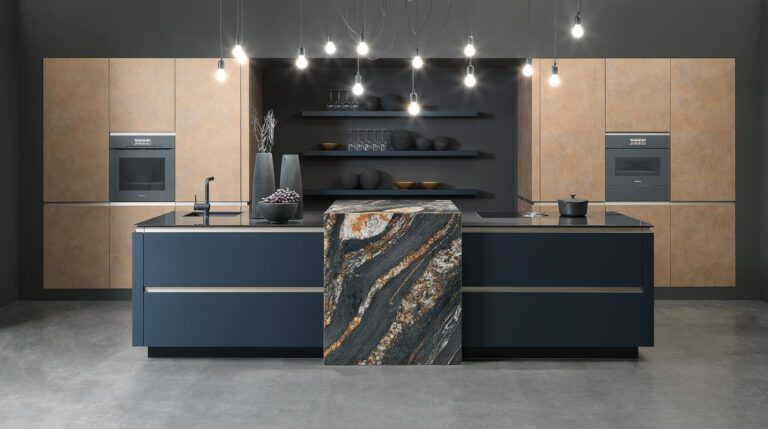
Quarried, sliced and polished rather than manufactured, so every slab is one of a kind and the piece you approve is the piece you get. It takes heat without complaint. Being natural, it varies, which is why we take you to the stone yard to choose your own slabs. Quartzites are natural metamorphic rocks with striking colours and crystal formations; they need sealing, but they make a real statement in a kitchen. Sensa is a range of natural stone given a factory treatment for long-term wear, which takes away most of the maintenance.
Sintered stone and porcelain
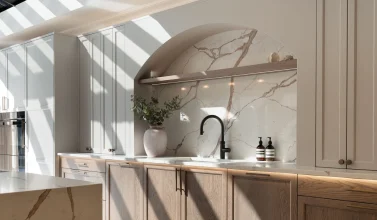
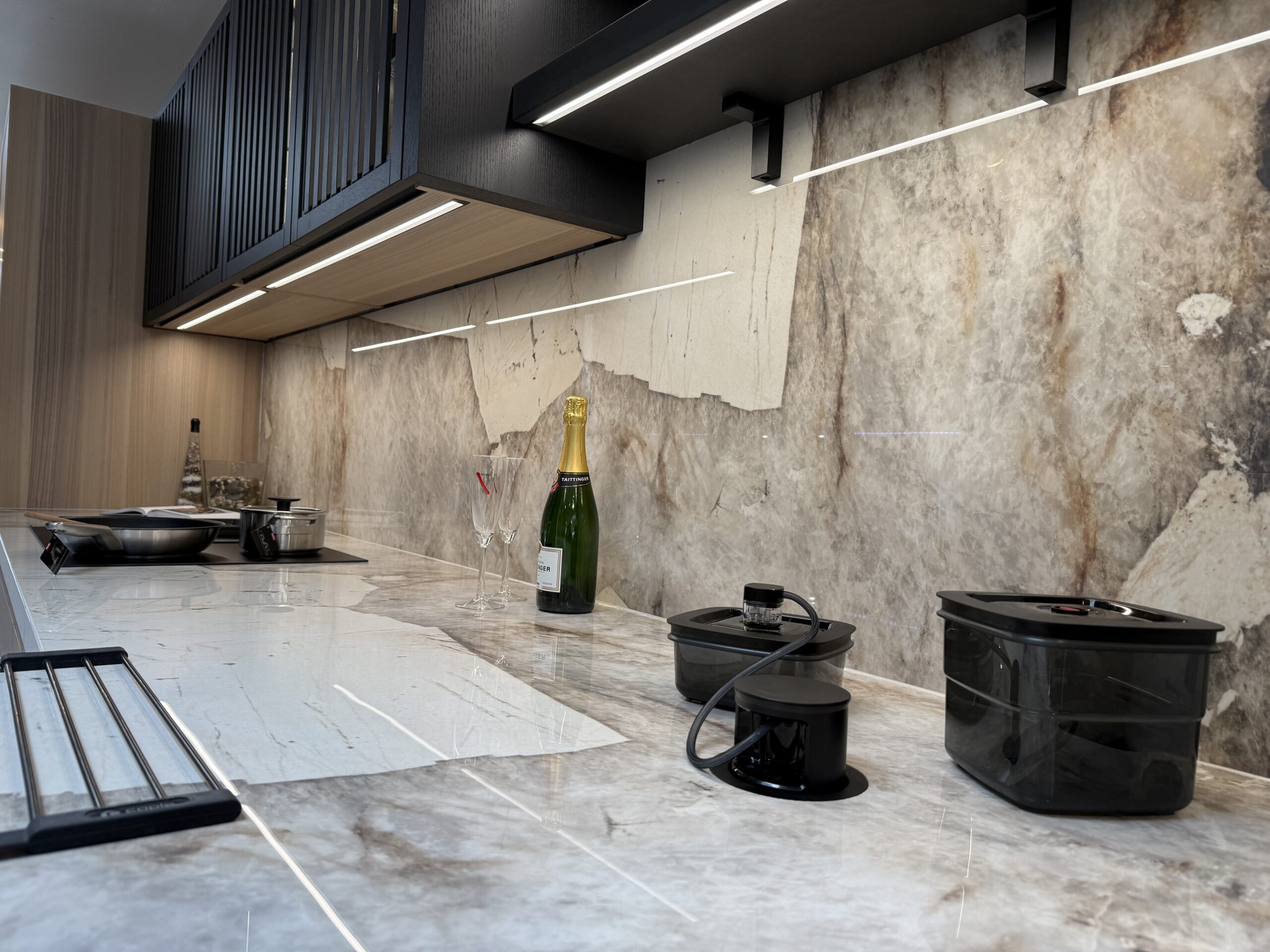
Made under heat and pressure until it behaves like a man-made metamorphic rock. It is so resistant to heat and scratches that it asks for neither trivet nor chopping board, and it is the one that will blunt your knives if you treat it as a board. Some patterns come in mirrored slabs, so the pattern can be matched across large areas. Large formats mean a full-height splashback with no join behind the hob.
Solid timber
The only one of the four that improves with a scratch. Natural wood brings warmth and richness to any kitchen. It needs oiling two or three times a year and it will move a little with the seasons, which is the trade for a surface that is warm underhand and can be sanded back to new. White or grey tinted oils keep some finishes looking fresh, or a natural or antique oil gives a more natural look. If a maintenance routine doesn’t appeal, use wood for a breakfast bar, pantry, sideboard or dresser, so there is less to look after.
What actually decides it
In practice the choice usually comes down to three things: how much care and maintenance you are happy to give it, whether you want the worktop to be the feature of the kitchen or the backdrop, and how the colour sits against the doors and the floor.
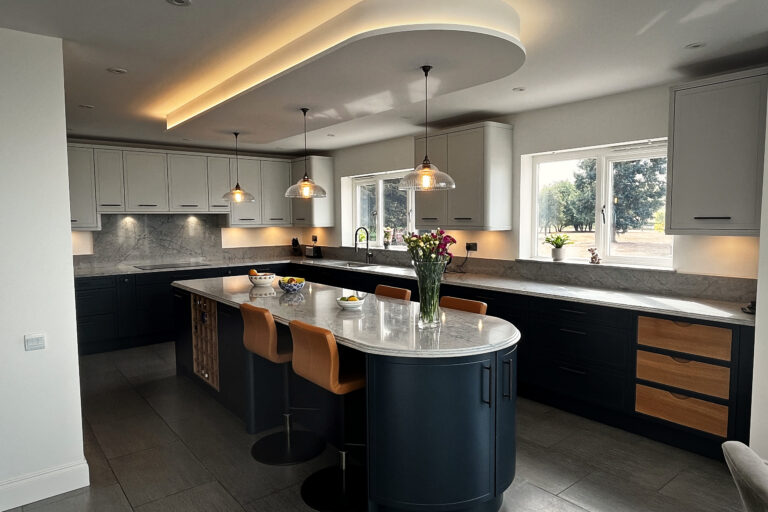
That last one is where most regret comes from, and we won’t let you get it wrong. A 100mm sample gives a good impression of the overall colour, but we always look at the full slab as well, in photos or in person, so you can see how the veining lands on a three-metre island and how it reads against your floor in daylight. Bring your door and floor samples with you, and we will put them side by side with the worktop so you can be sure they all work together.
One thing that is not a matter of taste: stone is templated from the installed cabinets, not from the drawing. That is why templating happens after the units go in, and why you get a worktop made to measure for your kitchen, with mitred island edges that actually meet.